Skin in the Game
The seduction of betting and prediction markets

Timmy wasn’t the only loser at the Oscars. My evening betting on the Academy Awards.
Help me recoup my losses by becoming a paid member of Herrera Words. 50% off uncensored and exclusive content and articles.
On a recent visit to New Orleans, a friend’s boyfriend was glued to his phone. “Polymarket,” my friend winked. “That’s how we paid for this trip.” Soon after, the betting app headlined the Golden Globes, ads for its counterpart Kalshi saturated my TikTok feed, and on South Park, the town used it to bet on whether Kyle’s mom would bomb Gaza.
I’m not a gamblin’ man. I’ve never wagered on sports and have only spent a few dollars on slot machines. But betting is now so embedded in pop culture that I wanted to see the appeal firsthand, so last week I downloaded Kalshi.
The app was instantly compelling. I could bet on anything: geopolitical events, gas prices, the weather, elections, reality TV, and, of course, the Academy Awards. Now, I may not understand the war in Iran well enough to predict oil markets, but the Oscars are something my Gay ass can definitely understand.
Many others had the same idea. More than $120 million was wagered on the 2026 Oscars across Kalshi and Polymarket, with roughly $30 million on Best Picture alone, a leap from $5.3 million last year.
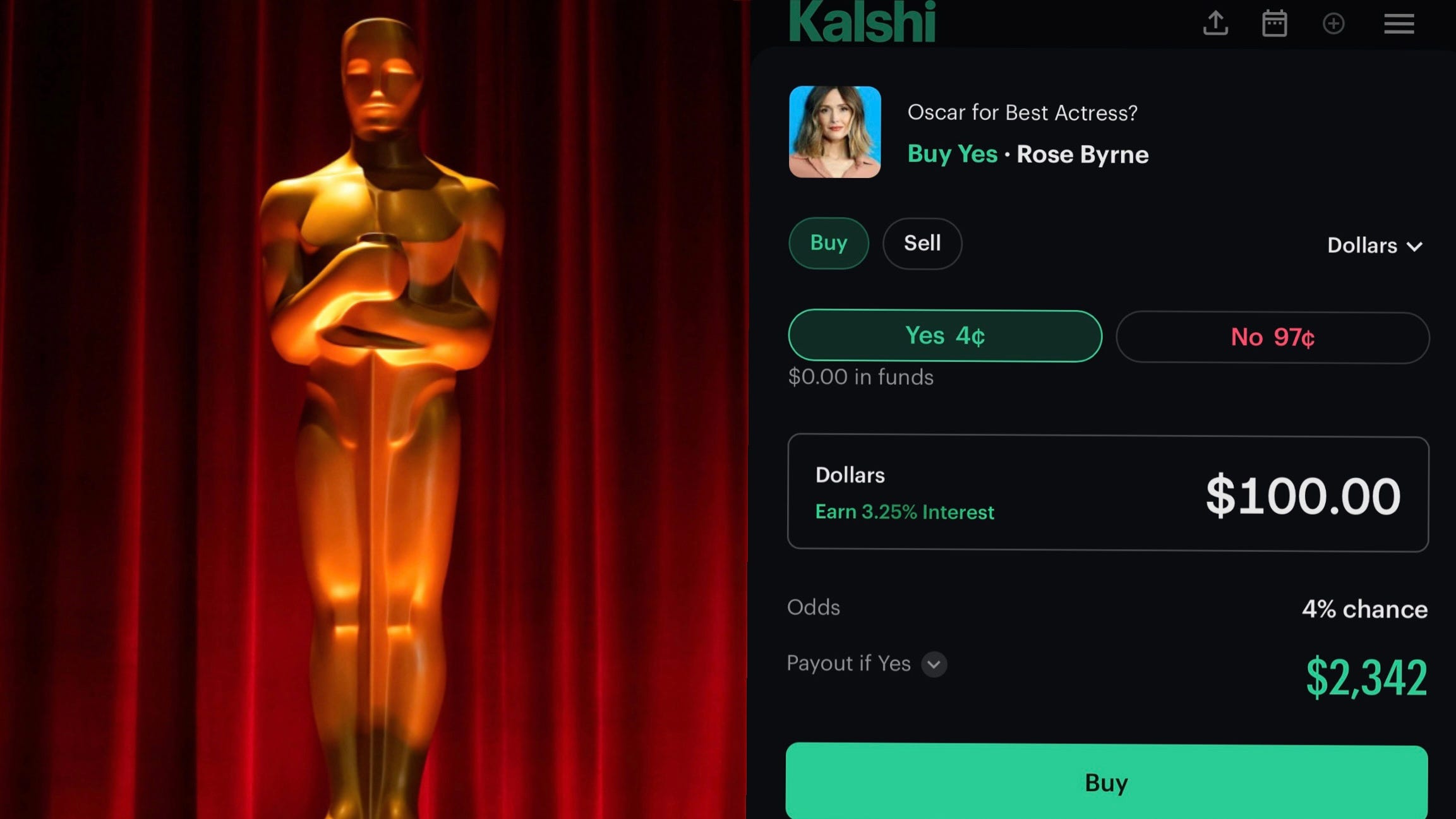
The markets had already crowned Michael B. Jordan for Best Actor, and sure bets didn’t seem as exciting: a $40 wager on him would return only $16. The real draw for me was the upsets. A $40 bet on Leo DiCaprio, Benicio del Toro, or Rose Byrne could return $1,000+.
I set myself a budget of $150. Anything over the national average for a week of groceries felt wrong. But the longer I sat with the app, the more elastic that number became. I spent nearly two hours toggling between bets, adjusting amounts, running outcomes, imagining what I’d do with the winnings. I was up way too late without placing a single wager. Fantasizing was itself a game. When I caught myself seriously considering what would happen if I wagered $1,000, I closed the app.
In the sobriety of the morning, the whole thing seemed silly. Then I opened the app and, overnight, the odds had shifted. Timothée’s 30 percent chance was now 33. Sinners’ odds had increased too. Small percentage changes had made my potential returns worse. The app created a subtle urgency. What if the odds moved again? A flutter in my chest. I need to put in my bets now. That low-grade anxiety revealed something more sinister. Forget the damage to my wallet, what was this doing to my body?
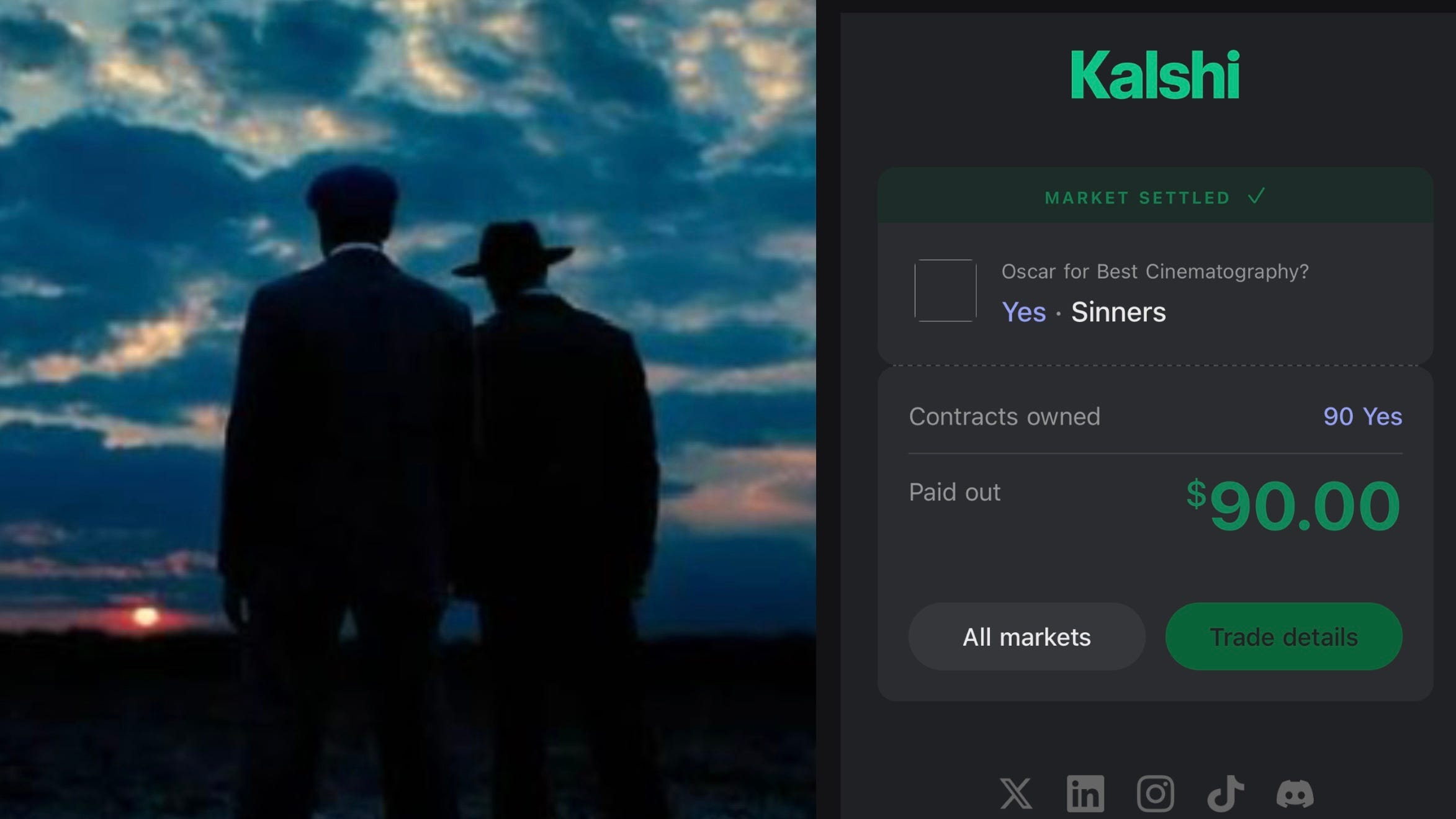
I placed long-shot bets that I knew were lottery tickets: Leo, Benicio, Rose. After all, I watched 2006’s Crash win live. The long shot I did have faith in was Cinematography for Sinners, for Autumn Durald Arkapaw. One Battle After Another was considered a shoo-in, and no woman had ever won, but it felt like a safe upset for the Academy, which was so torn between the films. I bet $20.
The day of the Oscars carried a different weight. I was fidgety getting home on time, opening the app repeatedly, debating wagering more. Still, I managed to stick to my budget.
When the Oscars opened and I immediately lost $40 on Wunmi Mosaku for Support Actress, the exercise felt silly again. I had essentially taken two $20 bills out of my pocket and tossed them in the trash. I lost my long shot on Benicio too.
Then Sinners won Best Cinematography. My $20 floated out of my wallet and magically multiplied into $90. I raised my arms and cheered. I poured another drink.
The shift was instant. My budget restraint disappeared. Maybe I had been thinking too small. I placed additional $20 bets on Best Actor. I bet on Timothée, Skarsgård, and even on a tie.
My friend glared at me.
“You are betting on a tie?”
“$20 could be $1,500! Let’s go in on it together!”
“You look crazy right now. I’m not throwing away $10.”
The rush made my budget collapse quickly, and the app made it frictionless. Funds moved instantly from my bank to Venmo to Kalshi, and though it didn’t directly take credit cards, I could have pulled cash back from my Visa into the betting pool in seconds if I needed to. I went $60 over my budget and, of course, lost the bet against Michael B. Jordan. When the dust settled, I had bet $210. My $90 made my losses $120.
And the truth is, it was fun. The warm feeling of participation, of having a stake in something bigger than me and outside my control, the connection to other bettors and, in a distorted way, to the stars themselves. But that feeling curdled quickly when I really sat with the larger implications.
If betting latches itself onto cultural events like this, it doesn’t just monetize them, it reshapes how I experience them. Corruption, both systemic and personal, can’t be far behind.
I’m (mostly) grown, I can afford to lose $120 on a social experiment, and I’m well aware of how dangerous digital platforms can be. Betting on the Oscars might be a yearly treat, but I won’t be obsessively wagering on the weather or World War III.
But if I was much younger, broke, lonely, struggling with substances, and looking for control and connection, this could become something else entirely. And it’s not in any of these markets best interests to keep those kinds of users safe or spell out the dangers of gambling addiction.
The last time I had felt this kind of dopamine pull was reporting on AI chatbots last year. It feels like we keep carving out crevices for impressionable or desperate people to fall into. And it will only get harder for all of us to figure out what’s just skin in the game and what’s a pound of flesh.
Support this work with a paid membership to Herrera Words.